Blockchain Infrastructure Deployment & Validator-as-a-Service

Designing, deploying, and operating production-ready blockchain infrastructure — from Testnet to Mainnet to Validator-as-a-Service.
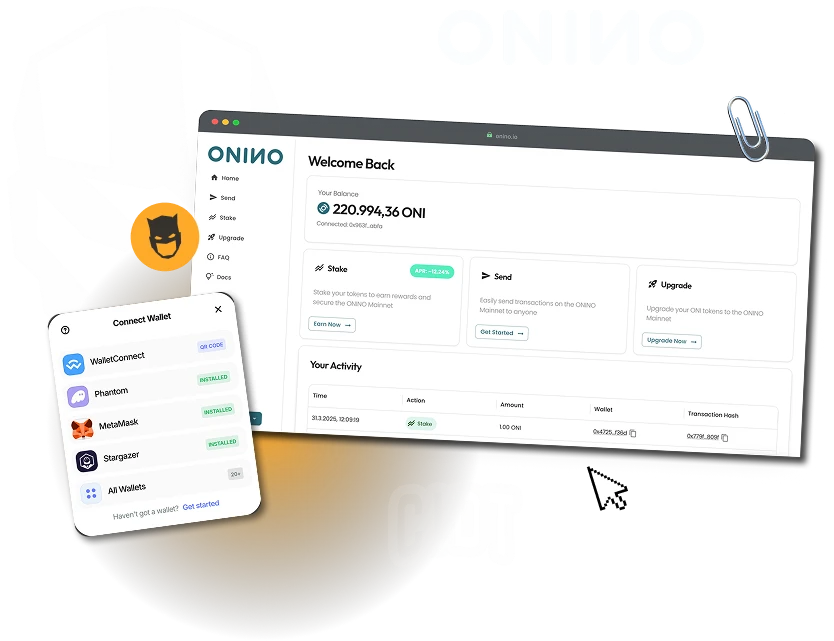

Blockchain infrastructure deployment and vaas

Overview

Project:
Blockchain Deployment & VaaS
Client Name:
ONINO
Headquarters:
Germany, EU

Industry

All
FinTech
Blockchain Infrastructure
Tags
Blockchain Network Deployment
IaC (Terraform / Ansible)
Validator as a Service
Non-Custodial Staking

About the Client

ONINO is a blockchain project focused on real-world financial use cases — tokenization, transparent financing, and open access to capital markets. The project is headquartered in Germany and built for production use, where infrastructure stability directly affects user funds and trust.
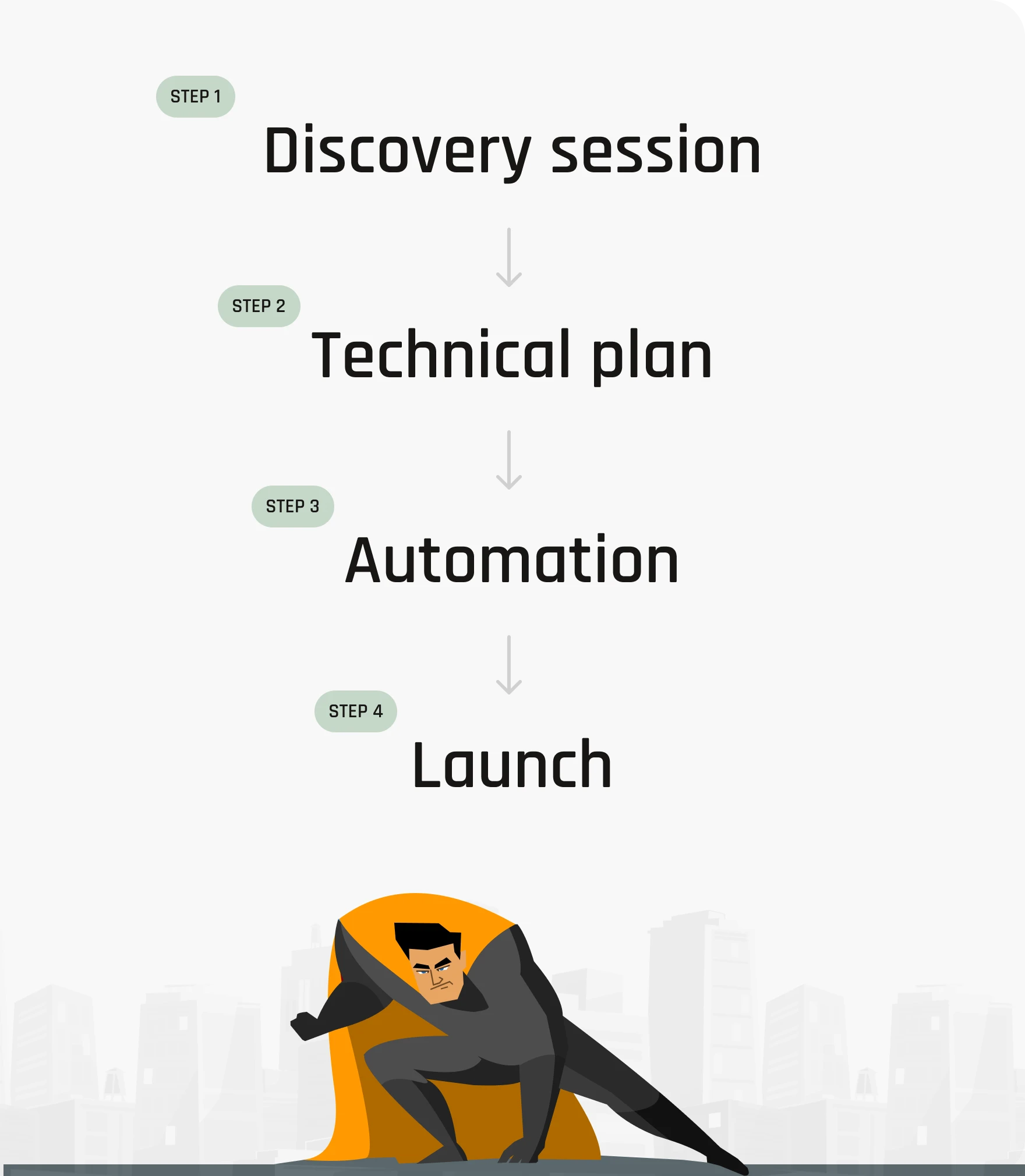
CIDT project approach steps: Discovery session, Technical plan, Automation, Launch

How CIDT Approached The Project

ONINO came to us with a clear goal and a tight timeline: a production-ready blockchain network with validator support, built to handle real financial workloads. From day one, we worked as part of their team.

We started with a discovery session to map out technical requirements, infrastructure constraints, and the project roadmap. Rather than moving straight to implementation, we first aligned on architecture: hosting provider, deployment model, automation strategy, and monitoring.

Infrastructure & Automation

We chose DigitalOcean as the primary hosting provider and used Terraform to provision and manage cloud resources — virtual machines, networking, storage. This gave us repeatable, automated deployments and eliminated configuration drift. For node setup, we wrote Ansible playbooks to install and run Phantom-based blockchain nodes on the provisioned machines.

Monitoring & Observability

We set up Prometheus and Grafana for real-time monitoring and alerting — so the team could see the state of the network at all times.

Tech Stack

  • Terraform — infrastructure provisioning and management
  • Ansible — node setup and configuration automation
  • Linux, Bash — system-level operations
  • Prometheus, Grafana — monitoring and alerting
  • AWS / GCP — redundancy and multi-cloud flexibility
  • Fantom — blockchain protocol

Team Composition

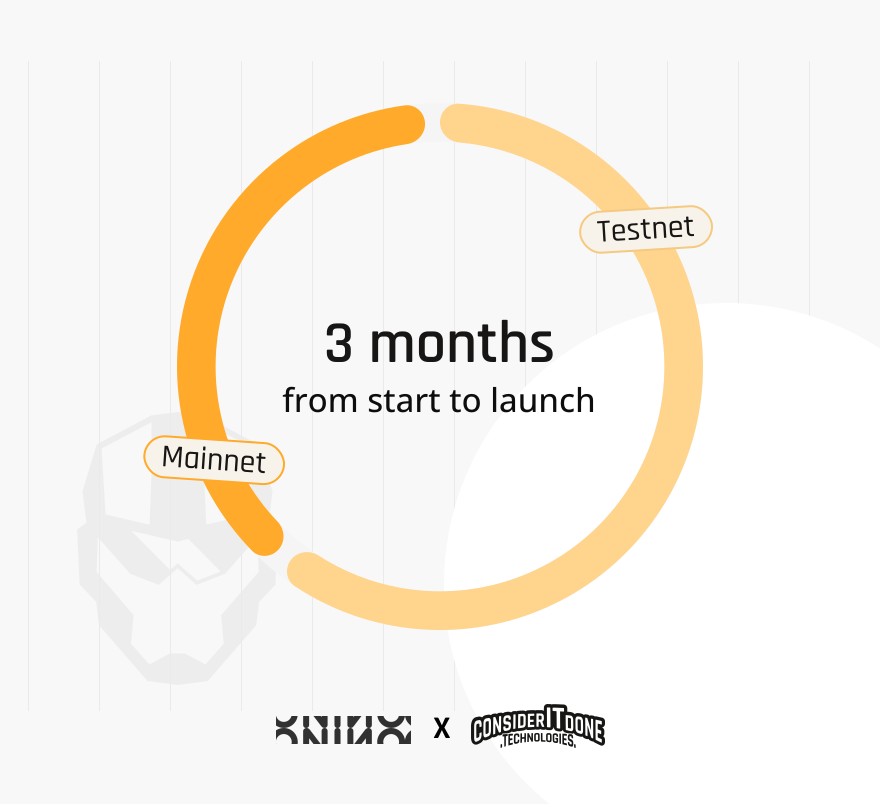
We assembled a dedicated embedded team for this project: Scrum Master, Tech Lead, Blockchain Engineer, and DevOps Engineer. Our senior engineers designed and delivered the protocol in three months — two months for Testnet, one month for Mainnet.

After Launch

Launching the Mainnet wasn't the end — it was a checkpoint. We stayed on and continued iterating: adding non-custodial validator node support, then building out the full Validator-as-a-Service platform (TradeVibe) — the first staking platform on the ONINO network.

As the product grew, so did the team. We expanded with a Full Stack Developer, UI/UX Designer, QA Engineer, and Business Analyst to support the platform in production.
Outcomes & Value

✓  Testnet deployed in 2 months

✓  Mainnet launched in 1 month

✓  Non-custodial staking — funds remain with the stake owner at all times

✓  Validator-as-a-Service platform (TradeVibe) built and operating in production

✓  Ongoing embedded partnership — CIDT remains part of the ONINO team

Contact Us
CIDT delivered Onino blockchain infrastructure in 3 months — launching Testnet in 2 months and Mainnet in 1 month, providing a complete Fantom-based solution with non-custodial validator support

Key Highlights

ONINO Blockchain is built to support real-world financial applications and make financing more efficient, transparent, and open through tokenization

We have been working with CIDT for years now and will be strengthening our collaboration further, even with a new, joint project in the future. We couldn't be happier with their work - the technical expertise and level of understanding of the developers, and especially that of CTO Ramil, is truly incredible and never ceases to amaze me.

The quality of the delivered work could not be better. Everyone on the team is super responsive and always available and ready to help in emergencies. Communication is also excellent. We really couldn't be happier with CIDT as our partner for everything related to blockchain infrastructure - by now, to us, they are an integral part of our team.

Thank you for everything!

Kai Firschau. Co-Founder & CTO, ONINO
Kai Firschau
Co-Founder & CTO, ONINO

Frequently asked Questions

1.

What is Validator-as-a-Service (VaaS)?

VaaS allows users to participate in blockchain consensus and earn staking rewards without running their own validator node. CIDT built the VaaS platform for ONINO so that ONI token holders can stake directly through a secure, non-custodial interface — meaning their funds remain in their own wallets at all times.
1.

How long does it take to deploy a production blockchain network?

For ONINO, we delivered a Testnet in 2 months and Mainnet in 1 month — 3 months total from kickoff to live production. Timeline depends on network complexity, protocol choice, and infrastructure requirements. We assess this during our initial discovery session.
1.

What does non-custodial validator mean?

A non-custodial validator setup means stakers delegate their tokens to a validator without transferring ownership. The funds stay in the staker's wallet — the validator only receives the right to validate on their behalf. This is critical for user trust in financial blockchain applications.
1.

Does CIDT stay involved after launch?

Yes — this is central to how we work. We don't hand off and disappear. For ONINO, our involvement expanded after the Mainnet launch: we built out the full VaaS platform and continue to support, scale, and improve the infrastructure as the product grows.
1.

We already built our blockchain infrastructure in-house. Can CIDT join at this stage?

Yes — this is one of the most common scenarios we work with. Many teams build the initial version themselves, then hit a wall: the infrastructure is running, but it's hard to scale, expensive to maintain, and the internal team is stretched thin trying to support production while building new features at the same time. CIDT can join at any stage. We start with a technical assessment to understand what's been built, where the bottlenecks are, and what needs to change. From there, we integrate into the existing team — not as a replacement, but as additional engineering capacity with deep blockchain infrastructure expertise. The transition doesn't require rebuilding from scratch. In most cases, we stabilize what exists, introduce proper automation and monitoring, and help the team scale from there.