Share
Lessons you don’t learn on testnet
Learn why testnet success doesn't guarantee production stability. Practical lessons on reliability, monitoring, security, and designing systems that handle real users and failures.
.png)
August 31, 2026
3 min
read
Learn why testnet success doesn't guarantee production stability. Practical lessons on reliability, monitoring, security, and designing systems that handle real users and failures.
TL;DR
Testnet proves that a system works. Mainnet shows whether it can survive real users, real load, and continuous operational pressure. This article shares production lessons. You'll learn about reliability, monitoring, security, and designing systems that handle failure.
When users depend on the system, reliability becomes the primary design constraint. You need stability.
What it means:
Users need systems that work, not impressive architecture.
On testnet, problems are visible because someone is watching. On mainnet? You can't assume everything is fine just because nothing alerted.
Here's what we’ve noticed: production systems must tell you when something is about to break, not after it breaks. This changes how you design infrastructure.
It`s important to separate signals from noise. You need to start catching problems before they grow. The right person at the right time should monitor alerts. How many false alarms are acceptable? Zero false alarms usually means you're missing real problems.
You can't add observability later. Mainnet forces it into the system's foundation.
Security discussions stay abstract on testnet. On mainnet, security becomes procedural work:
If a security practice can't be repeated and scaled across projects, it won't survive production.
We see many platforms stop at the first step - they publish security audits and consider the job done. But audits show security at one point in time. They don't show how you maintain security when the system grows. A single audit report doesn't help when you need to rotate compromised keys at 3 AM or when you add a new team member who needs access controls. Production security means having processes that work every day, not documents that look good once.
What happens if this component goes down? Can the system degrade gracefully? How fast can it recover?
These questions sound theoretical on testnet. Then mainnet happens.
A database fails at 2 AM. Your monitoring catches it in 30 seconds - but the recovery process needs manual steps. Three different people need to approve the rollback. The documentation lives in someone's personal notes. By the time you restore service, users already moved to a competitor.
Mainnet shows you something different: failures will happen. It teaches you something different: what needs automation to avoid human decisions at 3 AM. Which parts of the system can break without taking everything down. How to make recovery boring and predictable.
Testnet environments are forgiving. Failures are expected and often ignored. Production failures cost time, money, and user trust. And you remember every single one.
Once live, the quality of internal processes becomes obvious quickly:
Here's what happens: weak processes turn small technical issues into large operational problems. When something breaks, you need solid processes that tell you exactly what to do.
Actually, "quickly" is an understatement. You'll find process problems within the first week of going live. Sometimes within the first day.
This is one of the hardest lessons. Testnet success does not guarantee mainnet stability.
After 18 years in software engineering, we've seen this repeatedly: real traffic behaves differently. Real users behave differently. External dependencies behave differently.
Only production shows you how your system handles actual traffic, what breaks in ways you didn't test, when things happen too slow or in the wrong order, and where different parts of your system don't work well together.
Mainnet shows you where you were wrong. Assumptions that felt safe during development often don't survive reality.
Once a system is live, changing it becomes harder. Every shortcut taken earlier:
Mainnet makes design debt visible. It forces teams to think about the future. How will the system be operated, extended, and supported months or years later?
If you design only for testnet, you optimize for demonstrations. If you design for production, you optimize for responsibility.
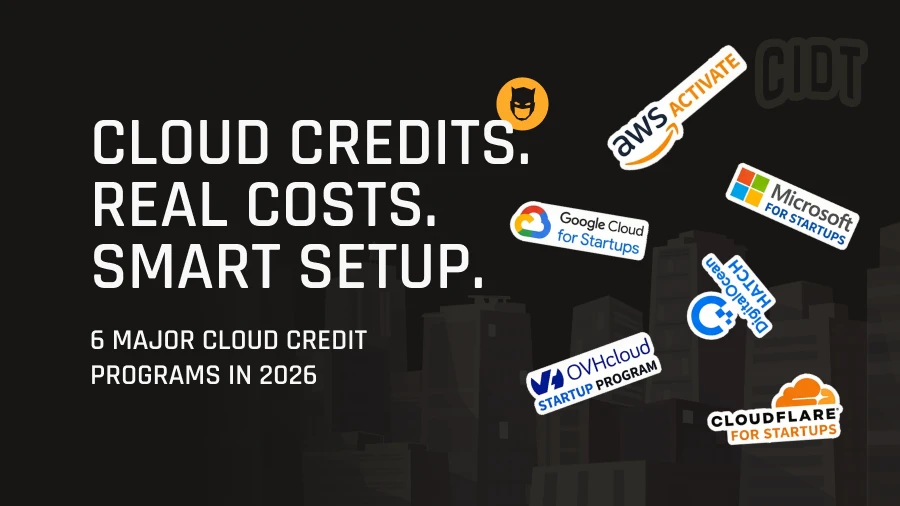
Web3 and fintech startups face infrastructure costs long before revenue — from node operations to real-time data processing and fraud detection. In 2026, over $600K in cloud credits is available to offset these costs, but most teams either apply too early, choose the wrong program, or build architectures that collapse once credits expire.
Blockchain rarely fails the way traditional systems do. The real risks lie elsewhere — in early-stage centralization, validator downtime, protocol upgrades, and infrastructure gaps. Based on insights from CIDT engineers, this article explains where outages actually come from and how to prevent them before they impact your network.

The SEC’s new token taxonomy provides a functional roadmap for founders, classifying crypto assets into five distinct categories from digital commodities to securities. This summary breaks down how to align your token architecture with these new guidelines to ensure compliance and utility from day one.
The stablecoin market hit $300B — and with GENIUS Act signed and BlackRock issuing tokenized funds, it's now core financial infrastructure. This guide breaks down all 8 types of stablecoins: how they work, where they've failed, and what trade-offs matter for builders and product teams.

In this article, we compare how the US, EU, UAE, and offshore regions regulate stablecoins and what that means for issuers. If you plan to launch a stablecoin, your choice of jurisdiction affects compliance, risk, and long-term growth.
Modern construction SaaS platforms rarely fail outright. They fail quietly - by letting ambiguity travel through search, documents, and integrations until it becomes expensive to fix. This article offers a clear executive lens for evaluating architecture through risk, control, and exposure.
Old software doesn’t fail overnight - it quietly drains time, accuracy, and operational capacity. This article breaks down the hidden costs CEOs and CFOs often overlook and shows how modernization exposes the true price of legacy systems.

CIDT has been named a Winner of the 2025 TechBehemoths Global Excellence Awards in Blockchain, Custom Software Development, and Mobile App Development. The recognition highlights the company’s operational excellence and impact across U.S. and global tech ecosystems.

Choosing the right blockchain stack defines not just your tech base, but how fast, secure, and scalable your product can become. This guide from CIDT compares Solidity, Rust, Move, and CosmWasm ecosystems in 2025 - showing how each impacts delivery speed, audit readiness, and long-term maintainability.
QA isn’t just about finding bugs - it protects your business from costly risks. Skipping QA can mean lost revenue, churn, and broken trust. This post shows why QA is essential for predictable releases and how it saves time, money, and reputation.

.svg)