Share
Ten years, built by people
A 10-year reflection on CIDT’s journey, culture, and people behind the work. Discover what defines our team - and explore the projects we’ve built along the way.

August 31, 2026
4 min
read
A 10-year reflection on CIDT’s journey, culture, and people behind the work. Discover what defines our team - and explore the projects we’ve built along the way.
Some anniversaries are about numbers. Ours felt like a better moment to listen.
As we approached 10 years of Consider It Done Technologies, we didn’t want to publish a timeline of milestones or a list of achievements. Instead, we asked the people who make up the company today a simple question:
“What is CIDT to you in one word?”
The answers became a snapshot of who we are right now.
Looking at the words our team shared, one thing stood out immediately: Team.
It appeared again and again - alongside trust, growth, support, stability, freedom, warmth, friendship, quality. Some words were written carefully, others quickly. Some were bold, some quiet. But together, they formed a clear picture.
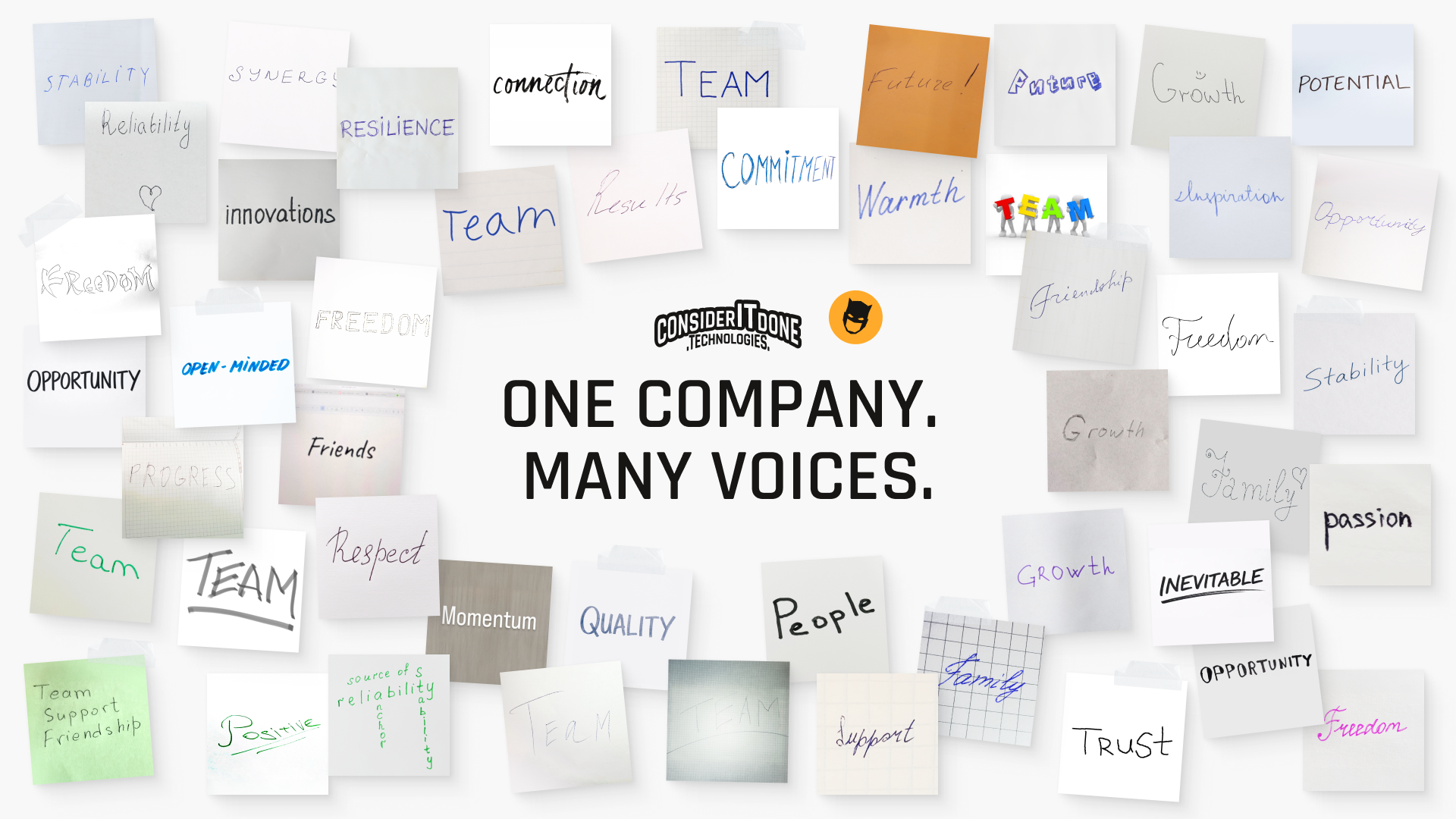
This wasn’t a branding exercise. It was a reflection.
A company where people feel safe to grow.
A place where professionalism and humanity coexist.
A team that values progress, without losing its soul.
Consider It Done Technologies didn’t start with a business plan. It started with real work that needed to be done.
We didn’t start by building a company. We had a project before we had a company. We needed a legal entity because the work was already there.
Eugene Fine, Founder & CEO
Before there was a company, there was a project. A technically ambitious one. In the early days of blockchain (long before the buzzwords and documentation), we were already working on infrastructure-level challenges: consensus mechanisms, smart contracts, and systems that hadn’t yet become mainstream.
Some of our earliest work involved blockchain solutions with tangible, real-world impact: from preventing counterfeit aircraft components through immutable ledgers, to foundational blockchain infrastructure that later became part of much larger ecosystems.
At the time, learning resources were few. Communities were small. Documentation was limited. Growth happened the hard way: by doing.
That approach - learning by doing - became one of the company’s defining traits.
In those early years, growth often meant choosing uncertainty over comfort.
I had a choice between a project I already knew very well and blockchain - something I had never worked with before. There was almost no documentation, no community, no clear answers. I chose blockchain.
Ramil, CTO
People joined projects they had never worked on before. Developers picked unfamiliar technologies instead of safer, well-known stacks. Mistakes happened and were expected.
From the beginning, the focus wasn’t on being perfect. It was on being curious, resilient, and honest about what we didn’t yet know.
That mindset shaped not only how we built software, but how we built relationships - with each other and with our clients.
Culture at Consider It Done Technologies didn’t emerge by accident. From the start, there were clear boundaries; not written on walls, but practiced daily.
No yelling.
No public blame.
No tolerance for toxicity - no matter how skilled someone might be.
Mistakes were treated as learning moments, not failures. Challenges were addressed directly, but with respect. Feedback was part of the process, not a threat.
Over time, this created something rare in distributed teams: psychological safety.
Across team responses, the same ideas kept coming up:
This sense of safety made growth possible. Not just technical growth, but human growth.
You’re not afraid to make mistakes here. You know you’ll be supported, not blamed, and that makes it much easier to grow.
Marina, QA Lead
This approach to culture and collaboration didn’t happen by accident. Our CEO shares more about the principles behind it, and what truly sets CIDT apart, in this article: What Makes CIDT Different
Over ten years, the company changed significantly. We grew from a handful of people to a global team. We began working with larger clients, across multiple projects at once. Our processes matured. Agile became not just an intention, but a consistent practice.
There were growing pains. Periods when the scale moved faster than the structure. Moments where people wore multiple hats just to keep things moving. But those phases passed.
Today, delivery is more structured. Responsibilities are clearer. Teams are supported by processes designed to scale, without becoming rigid.
What didn’t change was the atmosphere. Even as the company matured, the environment remained collaborative, friendly, and grounded in mutual respect.
I didn’t know how to build culture the right way, but I knew exactly how not to do it. I didn’t want to work in a place where people are against each other. I wanted to build a place where I enjoy working with people and where they enjoy working together.”
Eugene Fine, Founder & CEO
Growth didn’t replace culture - it reinforced it.
Over the years, our work has taken many forms - from early blockchain infrastructure experiments to long-term partnerships supporting complex, production-grade systems.
Some of these projects became important milestones not just for our clients, but for the broader ecosystem as well.
Among them:
These projects differ in scope and technology, but they share the same foundation: trust, clarity, and shared responsibility.
What matters to us just as much as what we build is how we work together.
Many of our client relationships grow into long-term partnerships. In some cases, we’ve been working side by side for over 1,000 days, steadily building, releasing, and refining products together.
Long-term work means staying close.
Across ongoing projects, we’re in daily contact with our clients. In shared Slack channels alone, teams exchange thousands of messages every year, discussing product improvements, resolving issues, and making decisions together in real time. It’s not about being “available.” It’s about being genuinely involved.
Behind every metric is a conversation.
Behind every release is a collaboration.
Behind every long-term partnership - people working through challenges side by side.
That’s what steady progress looks like to us.
Ten years in, we’re proud - not only of what we’ve built, but of how we’ve built it. We want to continue growing: in expertise, in quality, in relevance. We want to stay flexible, curious, and open to change. And above all, we want to remain a place where people feel safe to grow together. Because in the end, the most important thing we’ve built over the past decade isn’t a product or a platform.
It’s a Team.
Thank you to everyone who shared their words, stories, and memories, and to everyone who has been part of this journey so far.
Web3 and fintech startups face infrastructure costs long before revenue — from node operations to real-time data processing and fraud detection. In 2026, over $600K in cloud credits is available to offset these costs, but most teams either apply too early, choose the wrong program, or build architectures that collapse once credits expire.
Blockchain rarely fails the way traditional systems do. The real risks lie elsewhere — in early-stage centralization, validator downtime, protocol upgrades, and infrastructure gaps. Based on insights from CIDT engineers, this article explains where outages actually come from and how to prevent them before they impact your network.
The SEC’s new token taxonomy provides a functional roadmap for founders, classifying crypto assets into five distinct categories from digital commodities to securities. This summary breaks down how to align your token architecture with these new guidelines to ensure compliance and utility from day one.
The stablecoin market hit $300B — and with GENIUS Act signed and BlackRock issuing tokenized funds, it's now core financial infrastructure. This guide breaks down all 8 types of stablecoins: how they work, where they've failed, and what trade-offs matter for builders and product teams.
In this article, we compare how the US, EU, UAE, and offshore regions regulate stablecoins and what that means for issuers. If you plan to launch a stablecoin, your choice of jurisdiction affects compliance, risk, and long-term growth.
Production systems require fundamentally different thinking than testnet. Real users expose reliability gaps, monitoring failures, and process weaknesses that testing never catches. This article shares hard-earned lessons about building systems that survive continuous operational pressure, handle failures gracefully, and maintain security in daily practice.
Modern construction SaaS platforms rarely fail outright. They fail quietly - by letting ambiguity travel through search, documents, and integrations until it becomes expensive to fix. This article offers a clear executive lens for evaluating architecture through risk, control, and exposure.
Old software doesn’t fail overnight - it quietly drains time, accuracy, and operational capacity. This article breaks down the hidden costs CEOs and CFOs often overlook and shows how modernization exposes the true price of legacy systems.
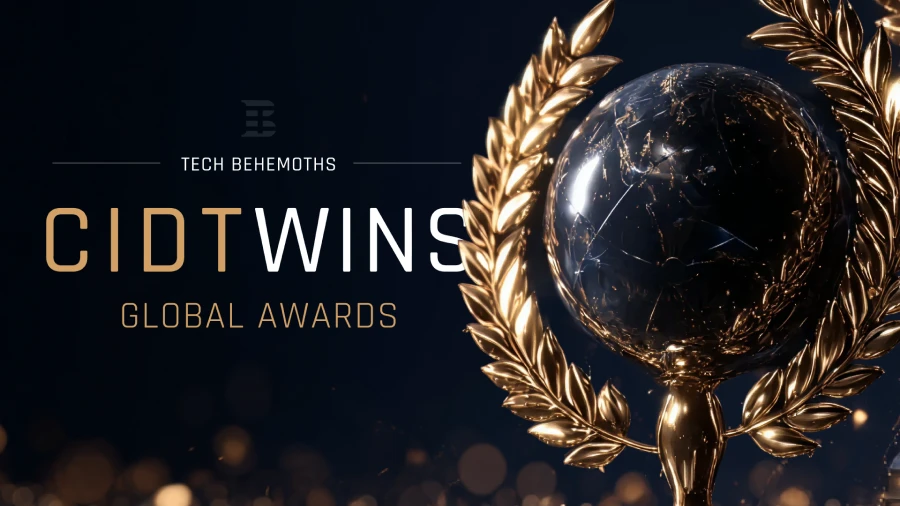
CIDT has been named a Winner of the 2025 TechBehemoths Global Excellence Awards in Blockchain, Custom Software Development, and Mobile App Development. The recognition highlights the company’s operational excellence and impact across U.S. and global tech ecosystems.
Choosing the right blockchain stack defines not just your tech base, but how fast, secure, and scalable your product can become. This guide from CIDT compares Solidity, Rust, Move, and CosmWasm ecosystems in 2025 - showing how each impacts delivery speed, audit readiness, and long-term maintainability.
QA isn’t just about finding bugs - it protects your business from costly risks. Skipping QA can mean lost revenue, churn, and broken trust. This post shows why QA is essential for predictable releases and how it saves time, money, and reputation.

.svg)