Share
What makes CIDT different after 10 years in consulting
Ten years in consulting taught us why trust, culture, and systems matter more than projects or personalities.

August 31, 2026
2 min
read
Ten years in consulting taught us why trust, culture, and systems matter more than projects or personalities.
Ten years is an unusual milestone for a consulting company. Teams turn over. Client priorities shift. Vendor relationships reset with budget cycles. Longevity in this industry is not a default outcome — it requires specific decisions, made consistently over time.
CIDT started as a project-based consulting firm. That model is straightforward: a client has a problem, a team is brought in to solve it, and the engagement ends when the work is done. Over the following decade, the understanding of what actually sustains a company beyond individual projects became the central question.
Several of CIDT's clients have been working with the company for more than 8 years. Some internal teams have stayed together for nearly a decade. This kind of continuity is rare in consulting, and it does not happen by accident.
Long-term relationships persist when they continue to make technical, operational, and organizational sense. Good initial delivery is a baseline. Ongoing relevance is what determines whether the relationship continues. When a client's product scales, the team supporting it needs to scale in capability alongside it. When organizational structures change, the working relationship needs to adapt without breaking.
CIDT has treated retention — both of clients and of people — as an outcome to be actively managed, not assumed.
Technical quality is easier to evaluate than organizational health, but the latter has a more direct effect on long-term outcomes. Teams that operate under unclear expectations or inconsistent leadership tend to produce inconsistent results, regardless of individual skill levels.
At CIDT, managers and technical leads are expected to build trust through their decisions — particularly in ambiguous situations where responsibility is unclear or pressure is high. The reasoning is operational: when trust is present within a team, communication is more accurate, problems surface earlier, and corrective action is faster. When it is absent, the same information gets filtered, delayed, or avoided.
Production incidents are one of the clearest indicators of how a team actually operates. A structured incident response at CIDT follows three steps: stabilize the system, resolve the issue, then conduct a structured review to prevent recurrence. This is where QA services become structural rather than reactive — embedded into the delivery process as a mechanism for catching failure conditions before they reach production. The final step also means closing the loop with the client — confirming what happened, what was fixed, and what has changed to reduce the likelihood of recurrence.
The review phase is where culture becomes a factor. Blame-focused post-mortems tend to reduce the accuracy of incident reports, because people describe what happened in ways that protect themselves rather than illuminate the system. CIDT's approach treats human error as an expected variable in complex systems — the relevant question is which conditions made the error likely, and how those conditions can be changed.
This approach produces more accurate data and, over time, more reliable systems.
For the first several years, new engagements at CIDT came primarily through personal and professional relationships. This is common in consulting, and it produces results — but relying on it exclusively creates a strain on scalability. Growth tied to the network activity of a small number of individuals is neither predictable nor transferable. Over time, CIDT invested in building repeatable processes across sales, marketing, delivery, and quality assurance. For several clients, this included Atlassian consulting and Jira data migration — restructuring how teams track work, manage backlogs, and maintain visibility across projects as their operations scaled.
A significant portion of CIDT's client growth has come from expanding existing relationships. Clients who started with limited scopes and modest budgets became long-term partners as their products matured and their needs grew. In some cases, this meant scaling delivery teams. In others, it meant taking on deeper technical ownership or embedded leadership roles — including projects in blockchain development, where technical complexity and long-term maintainability made continuity of the same team a practical requirement. The common factor was a willingness to grow with the client's actual trajectory — treating each project as a starting point, not an endpoint.
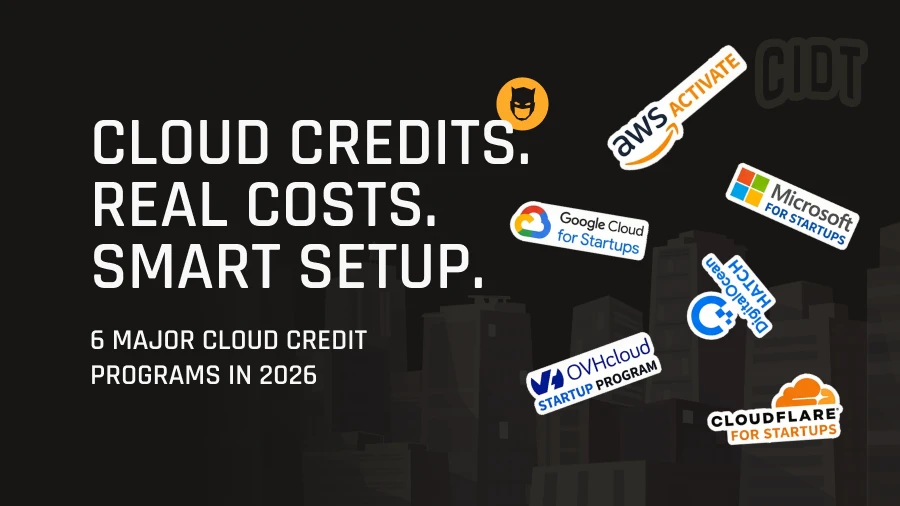
Web3 and fintech startups face infrastructure costs long before revenue — from node operations to real-time data processing and fraud detection. In 2026, over $600K in cloud credits is available to offset these costs, but most teams either apply too early, choose the wrong program, or build architectures that collapse once credits expire.
Blockchain rarely fails the way traditional systems do. The real risks lie elsewhere — in early-stage centralization, validator downtime, protocol upgrades, and infrastructure gaps. Based on insights from CIDT engineers, this article explains where outages actually come from and how to prevent them before they impact your network.

The SEC’s new token taxonomy provides a functional roadmap for founders, classifying crypto assets into five distinct categories from digital commodities to securities. This summary breaks down how to align your token architecture with these new guidelines to ensure compliance and utility from day one.
The stablecoin market hit $300B — and with GENIUS Act signed and BlackRock issuing tokenized funds, it's now core financial infrastructure. This guide breaks down all 8 types of stablecoins: how they work, where they've failed, and what trade-offs matter for builders and product teams.

In this article, we compare how the US, EU, UAE, and offshore regions regulate stablecoins and what that means for issuers. If you plan to launch a stablecoin, your choice of jurisdiction affects compliance, risk, and long-term growth.
Production systems require fundamentally different thinking than testnet. Real users expose reliability gaps, monitoring failures, and process weaknesses that testing never catches. This article shares hard-earned lessons about building systems that survive continuous operational pressure, handle failures gracefully, and maintain security in daily practice.
Modern construction SaaS platforms rarely fail outright. They fail quietly - by letting ambiguity travel through search, documents, and integrations until it becomes expensive to fix. This article offers a clear executive lens for evaluating architecture through risk, control, and exposure.
Old software doesn’t fail overnight - it quietly drains time, accuracy, and operational capacity. This article breaks down the hidden costs CEOs and CFOs often overlook and shows how modernization exposes the true price of legacy systems.

CIDT has been named a Winner of the 2025 TechBehemoths Global Excellence Awards in Blockchain, Custom Software Development, and Mobile App Development. The recognition highlights the company’s operational excellence and impact across U.S. and global tech ecosystems.
Choosing the right blockchain stack defines not just your tech base, but how fast, secure, and scalable your product can become. This guide from CIDT compares Solidity, Rust, Move, and CosmWasm ecosystems in 2025 - showing how each impacts delivery speed, audit readiness, and long-term maintainability.
QA isn’t just about finding bugs - it protects your business from costly risks. Skipping QA can mean lost revenue, churn, and broken trust. This post shows why QA is essential for predictable releases and how it saves time, money, and reputation.

.svg)