Share
How CIDT rebuilds legacy enterprise systems
Learn how CIDT modernizes legacy enterprise systems step by step - without risky rewrites, downtime, or broken workflows. A practical modernization approach.

August 31, 2026
2 min
read
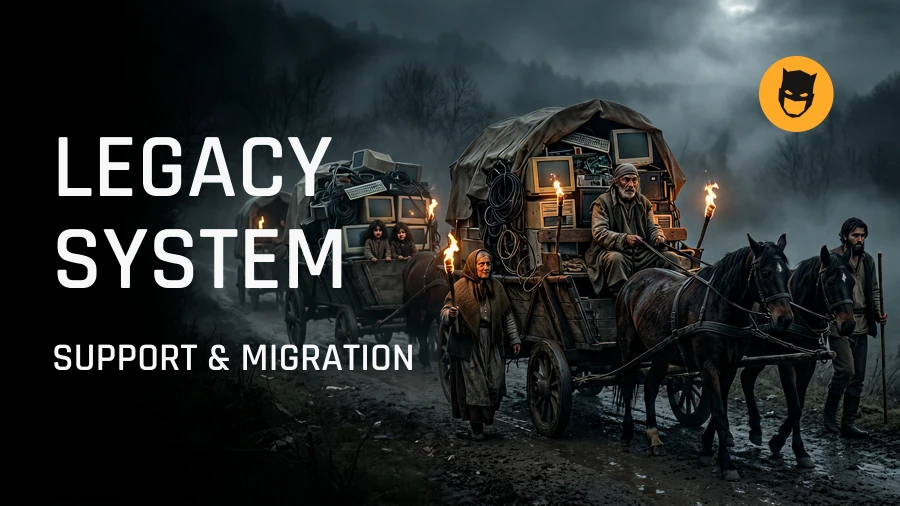
Learn how CIDT modernizes legacy enterprise systems step by step - without risky rewrites, downtime, or broken workflows. A practical modernization approach.
Under the surface of most enterprise software, there's a system that stopped fitting the business years ago. It still runs. People still use it. But somewhere along the way, the gap between what it does and what's actually needed started filling up with manual work — and nobody stopped to ask why.
That gap is where CIDT starts.
A full rewrite sounds clean. In practice, it's one of the riskiest things a business can do. The project runs for months, the business loses momentum, and the result looks different but works the same way.
CIDT approaches modernization across four layers that can move independently. Each one unlocks the next.
Operational layer first. This is where projects quietly fall apart. Manual deployments, fragile releases, missing monitoring — by the time anyone talks about architecture, these problems have been costing the business for months. We stabilize operations first: repeatable deployment flows, monitoring where it actually matters, failures that become visible early. Often, this alone speeds up delivery without changing a single core feature.
Application layer next. Instead of rewriting the whole system, we isolate the parts that hurt most — high-change modules, bottleneck features, areas with frequent bugs. These get refactored or rebuilt behind stable interfaces. The rest of the system keeps running. This avoids the half-built rewrite trap that kills most modernization projects.
Data layer carefully. Data modernization is where many projects stall. We identify authoritative data sources, define read and write ownership, and migrate incrementally. Legacy and modern paths stay in sync where needed. Teams need to trust the data at every step — so we move carefully and verify as we go.
Architecture layer last. Only after the system is stable do we reshape the architecture itself. By this point, decisions are grounded in reality — real traffic patterns, real scaling needs, real team capabilities. The architecture reflects what the system actually requires, based on evidence accumulated through the earlier layers.
Most enterprise systems can't go offline. And they shouldn't have to.
Legacy components continue serving traffic. Modern components are introduced gradually. Traffic shifts only when confidence is earned. Every release is designed to be reversible — if something fails, rollback is straightforward, and that's intentional.
Users don't experience disruption. Teams don't lose visibility. Production keeps running throughout.
Legacy systems accumulate decisions. Some good, some bad, most of them made for reasons that made sense at the time.
So we work closely with internal engineers, product owners, and long-term stakeholders before touching anything. Understanding why something was built a certain way is what separates a good migration from an expensive repeat of the same mistakes.
Modernization works better when the team understands what they're replacing and why it was built the way it was.
One of CIDT's clients ran a platform for the construction industry. The system had been in production for years. On the surface, it worked. Underneath, it was generating an enormous amount of manual work for the people using it every day.
Project managers received specification documents — dense PDFs listing hundreds of materials needed for a building. Each item had to be matched against a product database by hand. One search returned 80,000 results. The manager went back to the PDF, found more details, filtered again, got 300 results. Repeated this for every item on the list.
CIDT replaced the system from the ground up. New data layer, new search infrastructure, new workflows. The redesign moved toward clarity: workflows built around how specialists actually work.
Search was rebuilt to handle millions of product entries with real-time filtering. A query that previously returned 80,000 results could now resolve to an exact match in one step.
The most significant addition was an AI module for specification matching. A user uploads a PDF. The system reads it, extracts every product reference, identifies manufacturer, collection, color, size, and other relevant attributes — and finds the exact match in the catalog. What used to take dozens of manual steps now takes one confirmation.
Additionally, the platform now generates full project documentation automatically, supports supplier negotiations inside the workflow, and integrates directly with construction management platforms. No manual export, no re-entry between systems.

.svg)